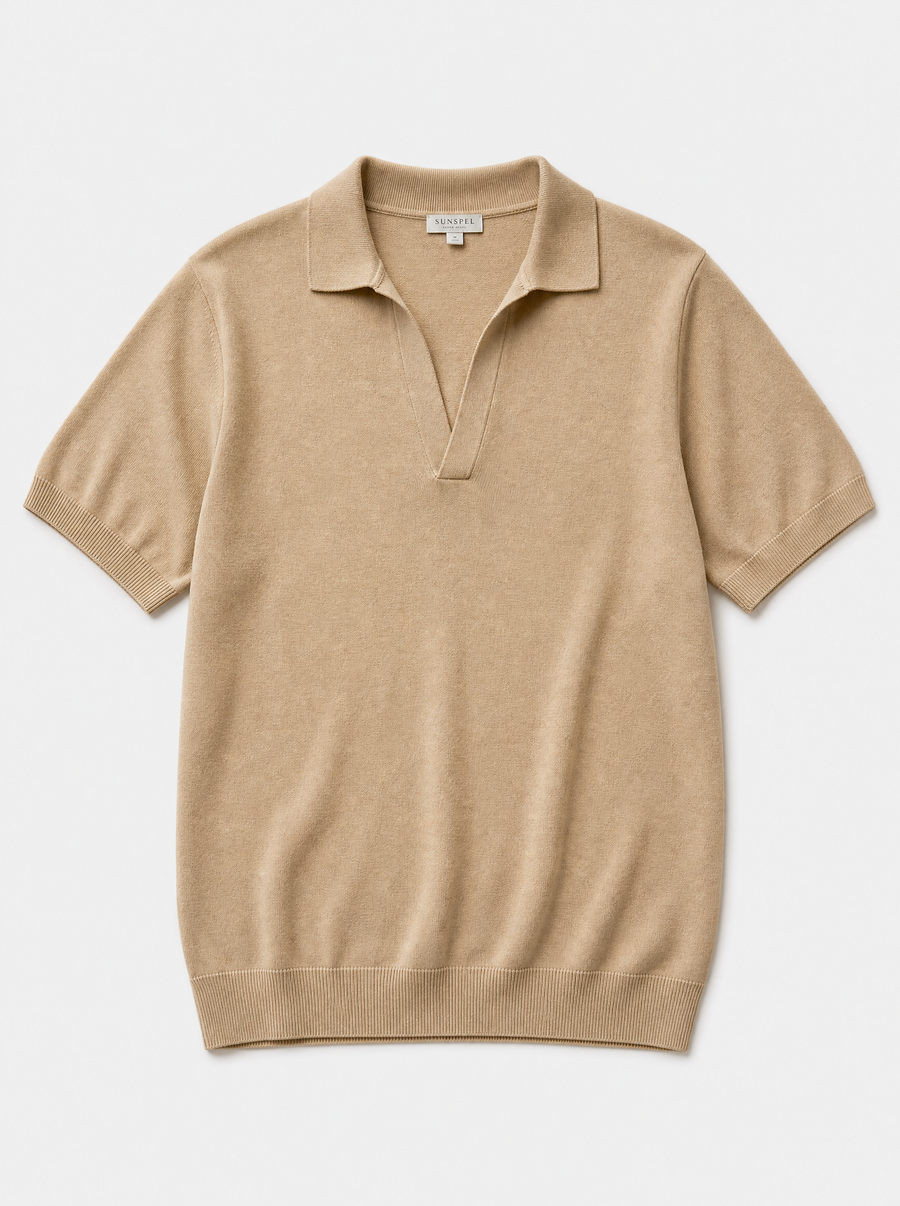
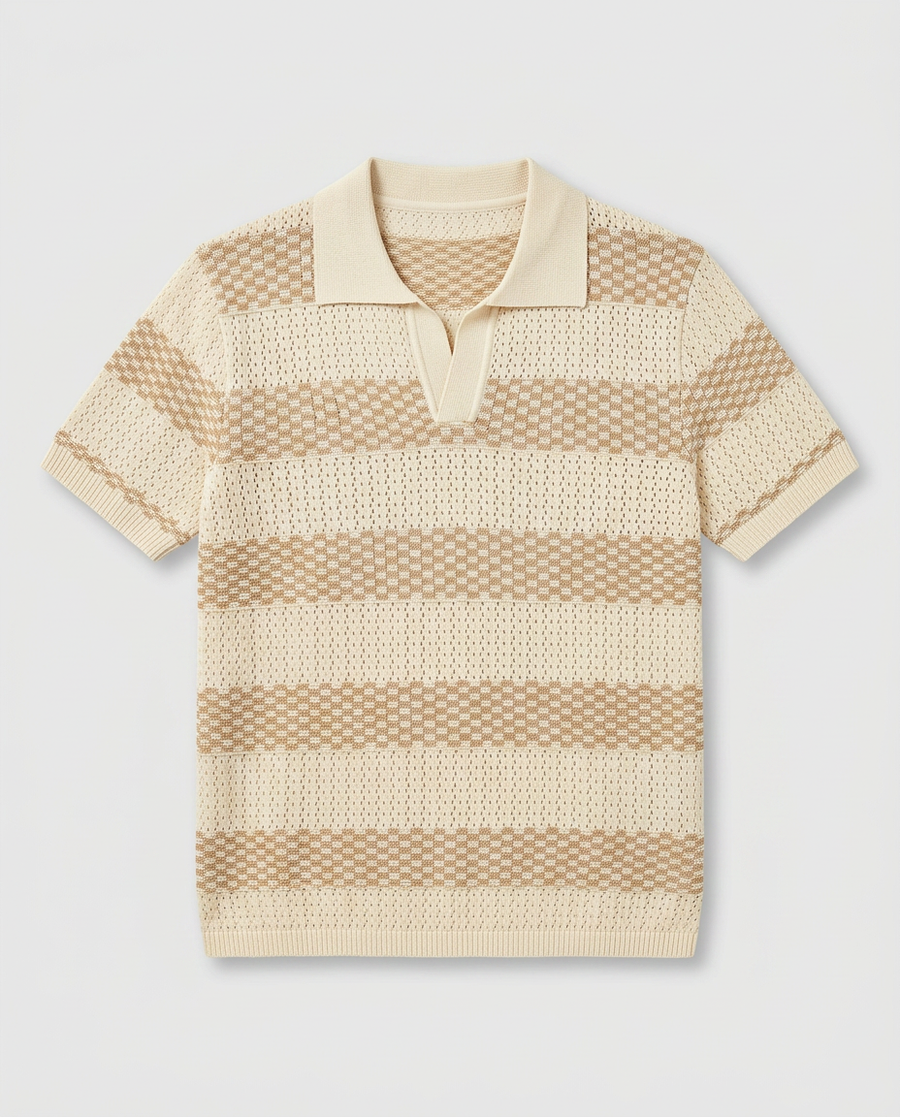
The polo shirt was invented on a tennis court, and everyone knows the name attached to it. What fewer people know is that within a decade of its arrival, Italian knitters on the Ligurian coast had quietly reinvented it — not cut and sewn from pique, but knitted whole from fine cotton, with a soft, unstructured collar and a placket that could be worn open without collapsing.
Why knitted, not cut
A cut-and-sewn polo has seams; a knitted one has almost none. It moves with the body, it drapes rather than hangs, and it sits under a linen jacket without the collar fighting the lapel. It also holds colour differently: the yarn is dyed before knitting, so the shade has a depth that printed or piece-dyed jersey never quite reaches.
The 1950s and 60s
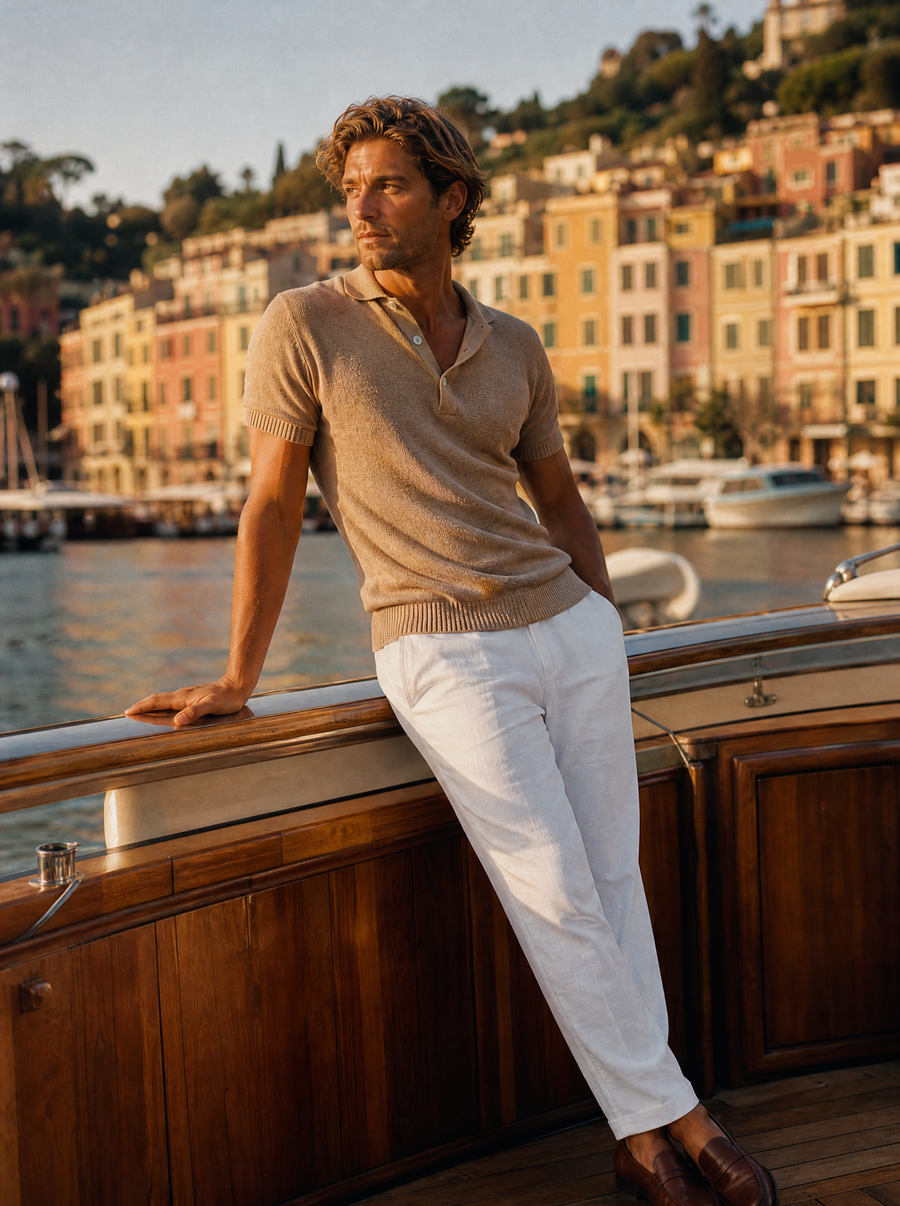
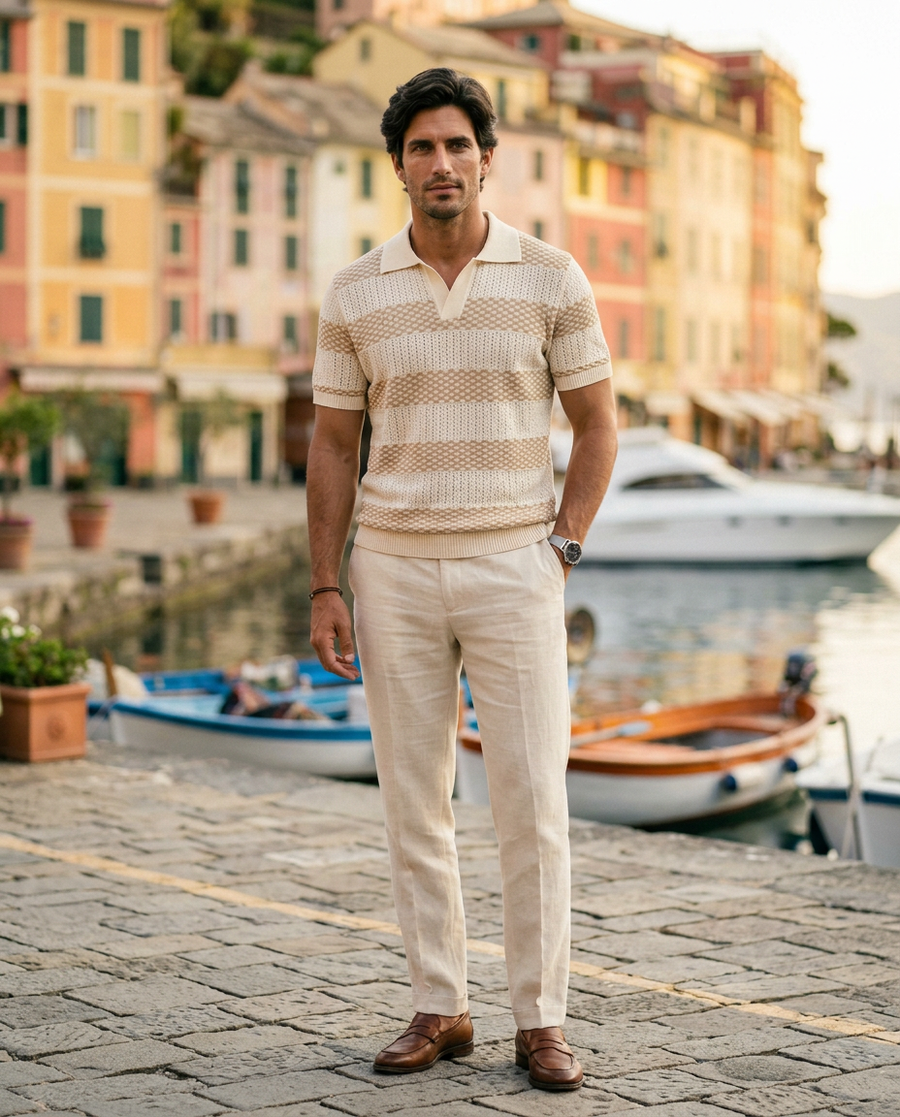
By the time the film crews arrived on the Riviera, the knit polo was the uniform of the coast. Look at any photograph from Portofino or Saint-Tropez in that period and it is there — usually in ivory, sand or navy, usually with the sleeves pushed up, usually with a cigarette that we do not recommend.
The Saint Véloir version
Our polos are knitted in a small mill outside Biella from a 16-gauge mercerised cotton, which gives the surface its faint sheen. The collar is knitted separately and attached by hand so it lies flat. The hem is ribbed rather than straight, so it can be worn tucked or loose. And the colours are the ones the coast has always worn: we have not improved on them, and we do not intend to try.
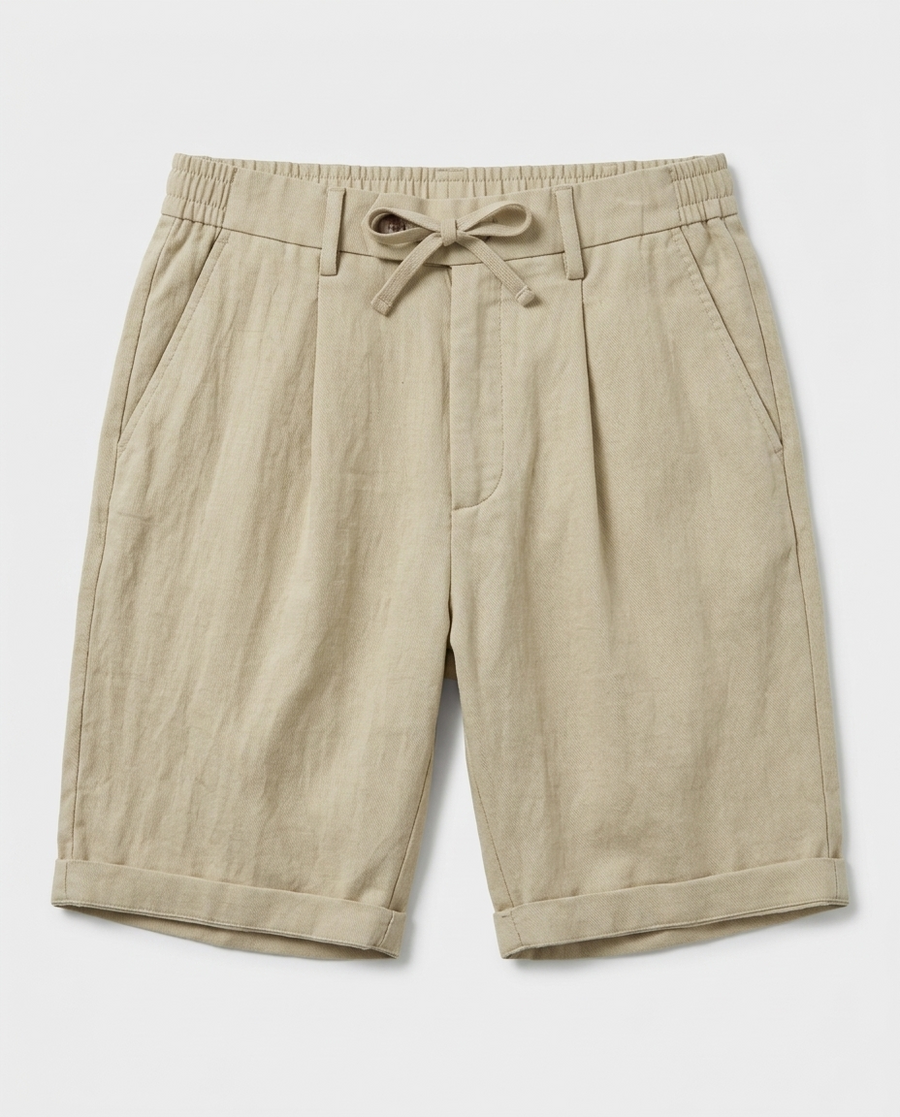
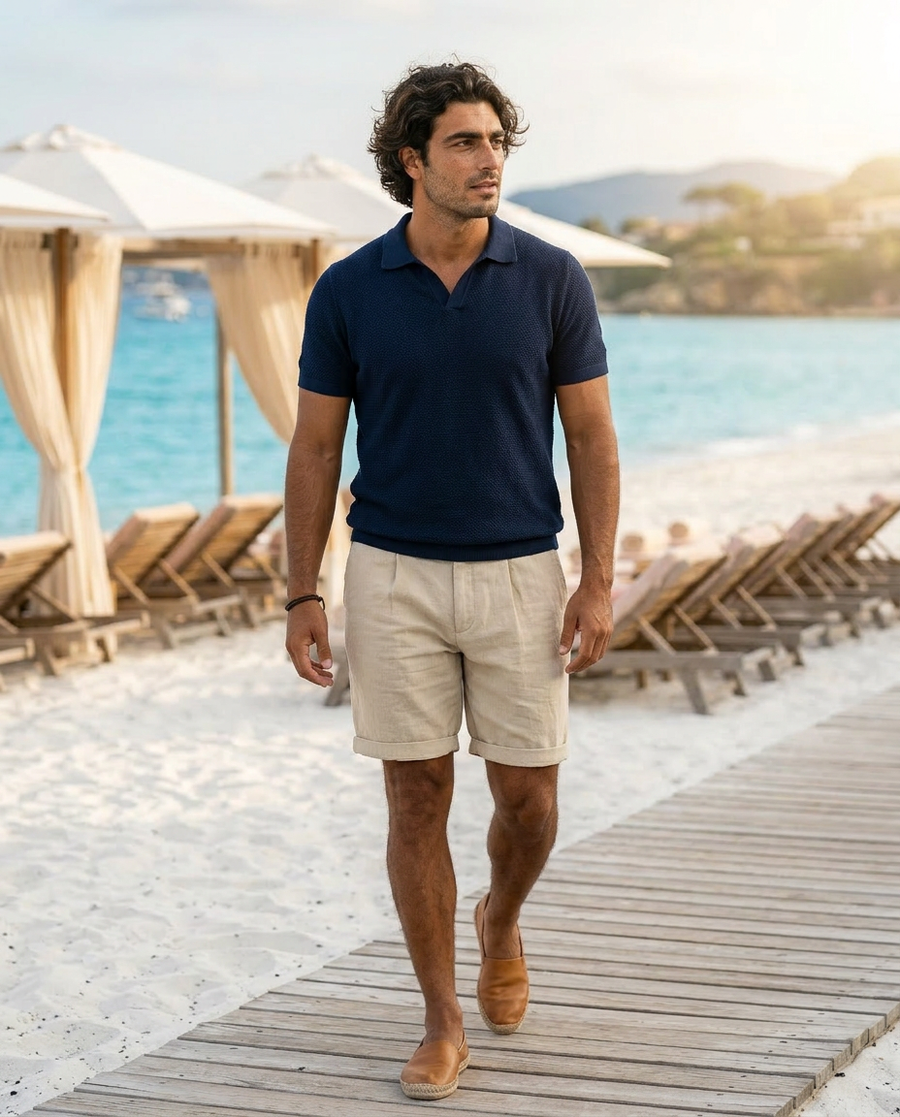
Wear it with tailored shorts to lunch, with linen trousers to dinner, and with nothing underneath at any time.